Kenneth Roy

The expert view is wrong.
These deaths could
have been prevented

Bob Cant

What does
'Tutti Frutti'

say to us now?


6

John Cameron

The great 'Chariots
of Fire' was the
purest hokum

4

7

Andrew Hook

Down with
everything: the new
American mantra

5

7

Ronnie Smith

Tanned and smiling,
Mr Blair arrives
among us

5

7

Islay McLeod

Villages of
Scotland:
(3) Thornhill

5

08.06.11
No. 414

John Cameron

The apocalyptic scares which dominated Europe at the close of the first millennium returned at the end of the second in an explosion of precaution and risk-aversion.
     The success of scaremongering has little to with the reality of the threat as it depends on the ability of the scaremonger to resonate with contemporary cultural values. Thus the Rev Harold Camping's end-of-the-world prediction, which would have caused mass panic in the Dark Ages, provoked only hilarity and 'Rapture' parties.
     Yet our scientific age falls for the ridiculous Al Gore and his disaster movie and even awards him a Nobel Prize for predicting all sorts of 'end-of-the-planet' nonsense.
     Germany's hysterical decision to close its nuclear power plants chimes with threats of health pandemics and all the other mega-hazards said to confront humanity today.

SR accepts no advertising or corporate backing. We depend entirely on the generosity of our individual supporters. Help SR to flourish by becoming a Friend. [click here]

Today's banner
Wild garden, Pitlochry
by Islay McLeod


The Irish demand gender

equality of others, but

fail to deliver it themselves


Kieran O'Brien


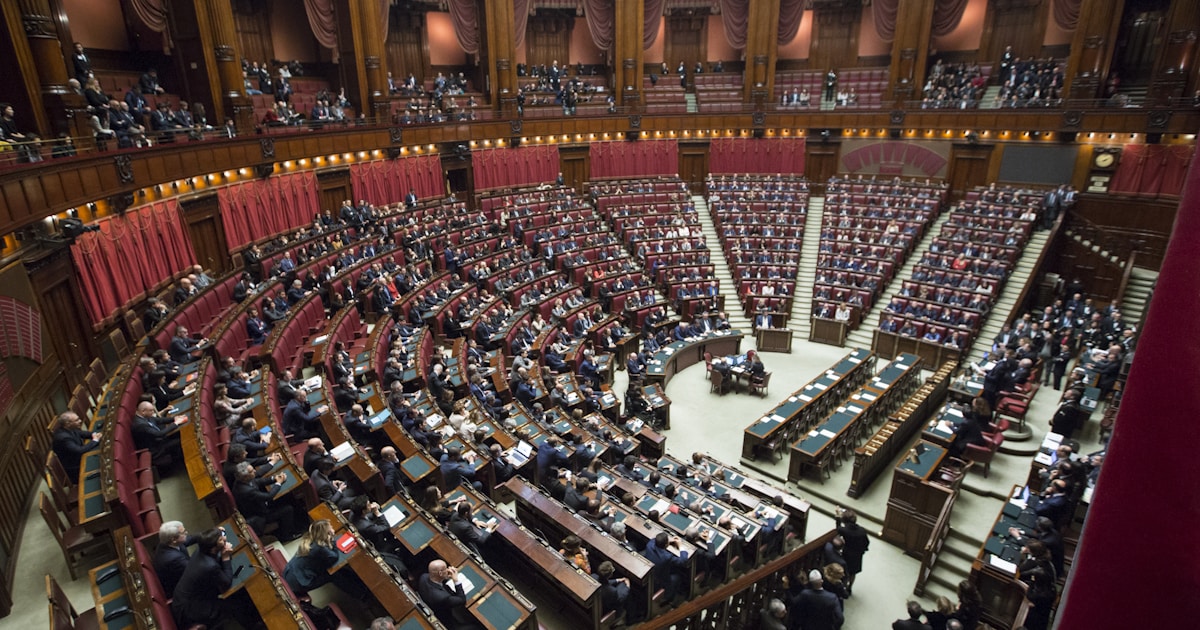
What gives Ireland the moral authority to focus its aid agenda on gender equality when Ireland itself will fail to meet millennium development goal 3.3 on the proportion of seats held by women in the national parliament?
     Since 1996, Ireland's aid programme has promoted gender equality in the developing world – imposing gender quotas and guidelines which we don't even adhere to ourselves. We have prioritised gender equity in political decision-making, abroad, for over 15 years – and yet we currently only have two women in the Irish cabinet.
     In 2009, Ireland was the seventh most generous aid donor in the world in per capita terms. In 2011, the Dail is only 15% female – making Ireland 74th in world rankings on female representation.
     Mozambique, one of the main recipients of Irish aid, ranks 9th on female representation. So we're 74th in world rankings and one of our programme countries for development ranks ninth. This is largely the result of a mandatory gender quota imposed on them. Anyone who has spent time in Mozambique will know that full gender equality is far from a reality. If nothing more, this should be used to change our approach to aid. Quotas don't bring full equality – identifying and breaking down barriers does.
     When the economic downturn recently hit, Ireland's aid budget was cut significantly. Since then 'charity begins at home' is a commonly heard response by fundraisers in international charities. If charity really does begin at home, then why don't we adhere to the same standards we impose on aid-recipient countries?
     This level of global hypocrisy is damaging to our aid programmes as well as our international credibility. It also massively over-simplifies a complex problem. If it really is as simple as bringing in a quota system to put women in the Dail, we should just all sit back and wait for the IMF to insist that the next draw-down on the bailout loan is conditional to the introduction of mandatory electoral gender quotas. Because that's how we behave in our aid programmes – do that and get this – completely ignoring the fact that we've never done it ourselves.
     If the IMF insists that we bring in an electoral gender quota will the problem really be solved – does having more women in the Dail result in fair and equal participation? Is the root problem of inequality really solved? Long-term sustainable change needs to come from within. Full and true equality is only achieved by identifying the barriers and obstacles that are preventing women from entering politics and breaking them down one by one.


I'm not suggesting that parliamentary reform is an easy task or can
happen overnight, but it's an important step in breaking down an obstacle to equality.


     The reasons behind the alarming lack of female representation in Ireland vary from the glass ceiling of the political parties to the chauvinistic arena of the Dail. Overall, only 21 out of 43 constituencies have any female TDs. For the vast majority of women in Ireland, politics is a spectator sport.
     There are many amazing, smart Irish women who are very capable of representing their constituency and leading Ireland. In order for this to be a reality, some of the fundamental barriers need to be identified and demolished.
     In 2011, only 15% of the candidates were women. The average success rate of both male and female candidates was very similar – about 30% each. However, if you take the independent candidates out of this, a difference of 10% appears in favour of male candidates. This suggests, as is commonly reported, a reluctance of political parties to put female candidates in winnable seats. One of the main reasons for this is the lack of diversity in our political make-up. The homogenous nature of politics in Ireland has resulted in a narrow group of rural men trained in law running the government during the week and heading home at weekends to their wives/home-builders.
     The Dail is a male environment with a culture of heated debates that carry on long into the night. The vast majority of votes happen in the second sitting of the day at 3.30pm when children need collecting from school. These are just a couple of examples of the barriers we need to break down. Now, I'm not suggesting that parliamentary reform is an easy task or can happen overnight, but it's an important step in breaking down an obstacle to equality.
     For many years, Ireland has prided itself on its overseas development agenda. Rightfully so. It's integrated and effective. It's about long-term programmes not short-term projects. It's not simply 'give a man a fishing rod' thinking. It's a detailed assessment of people's needs and planned interventions – with an understanding that perhaps he doesn't eat fish or he doesn't live by the sea. We should be proud of this.
     We should also be proud of having a moral agenda. Standing up for equality and inclusion is right and fair and just. Aid agendas need to be re-understood with this in mind. With the timeframe for the millennium development goals coming to a rapid end, it's time Ireland became a more credible voice for development. It not as simple as saying you should do this because we said so. It should happen because we've identified the complex web of barriers for equality by working collectively – and so should you.


Kieran O'Brien works for UNICEF Ireland. He won the title Ireland Young Thinker of the Year 2011 for this paper, delivered at the Young Ireland Programme organised by the Scottish Review