UK secures £10bn Norwegian warship contract boosting Scottish shipbuilding
The Type 26 frigate contract will support thousands of jobs on the Clyde and extend production well into the 2030s.
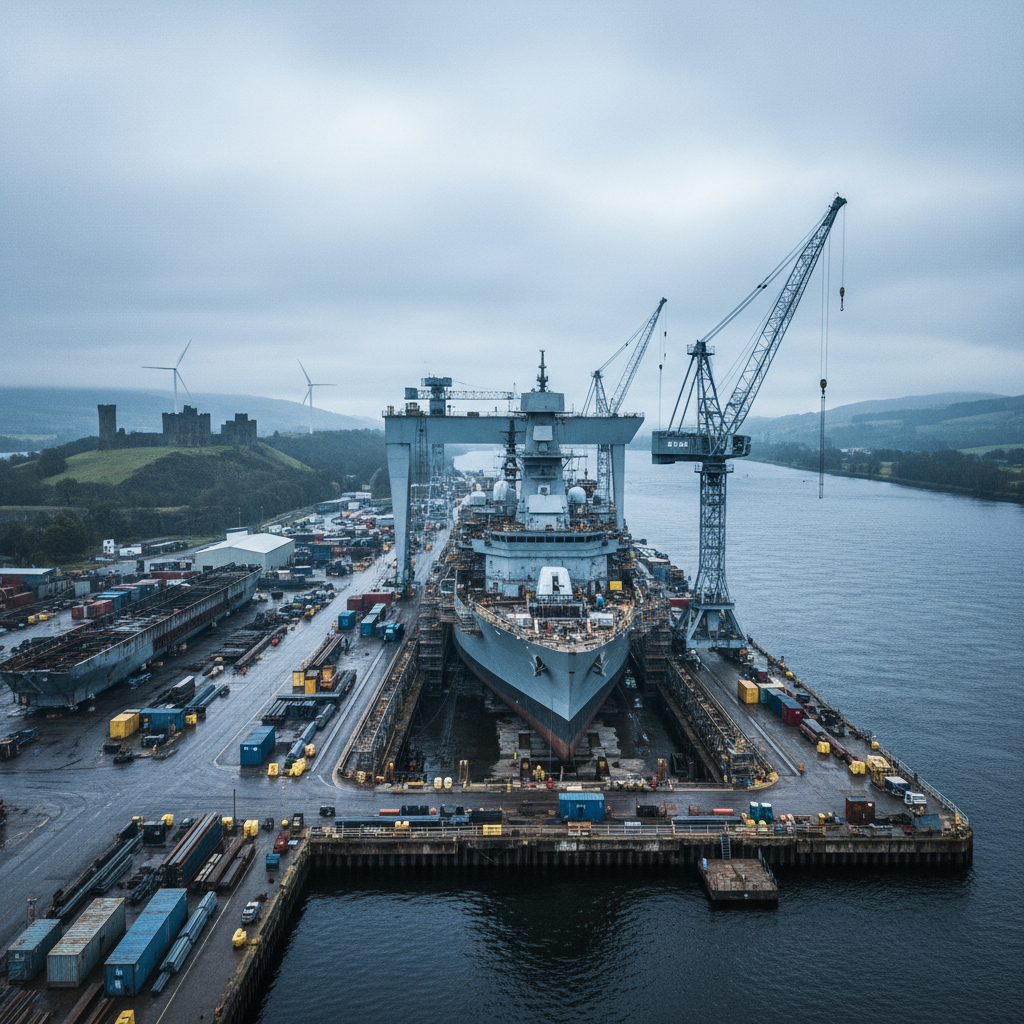
The UK government has secured a £10bn contract to supply Norway with at least five new Type 26 warships, delivering a major boost to Scottish shipbuilding with production anchored at BAE Systems' River Clyde facilities in Glasgow.
The agreement, announced in early June, represents one of the largest defence export deals in recent years and will extend the existing Type 26 production pipeline well into the 2030s. UK officials said the contract will support thousands of jobs and drive long-term investment in Scottish yards, cementing the Clyde's position as a cornerstone of British naval shipbuilding.
Norwegian vessels tailored for North Atlantic operations
The Norwegian warships will be based on the Royal Navy's Type 26 frigate design but specifically configured for anti-submarine warfare operations in the North Atlantic and High North regions. This customisation reflects Norway's strategic maritime priorities and the vessels' intended deployment areas in increasingly contested Arctic waters.
BAE Systems' Govan and Scotstoun yards on the Clyde are already producing Type 26 frigates for the Royal Navy, with the first vessel HMS Glasgow currently under construction. The Norwegian order will run alongside the domestic programme, providing sustained work for the shipbuilding workforce and supply chain partners across Scotland. Each Type 26 frigate measures 149.9 metres in length and incorporates advanced stealth technology and mission systems designed for modern naval warfare.
The Norwegian vessels will feature enhanced cold-weather capabilities and specialised equipment for Arctic operations, including reinforced hull structures and upgraded heating systems. These modifications ensure the ships can operate effectively in the harsh conditions of Norway's northern maritime borders, where temperatures can drop well below freezing for extended periods.
Political leaders welcome economic impact
Scottish government ministers have praised the contract as validation of the Clyde's world-class shipbuilding capabilities and its strategic importance to UK defence manufacturing. The deal comes at a crucial time for Scottish heavy industry, providing certainty amid broader economic challenges facing traditional manufacturing sectors.
Norwegian defence officials emphasised their confidence in British shipbuilding expertise and the proven performance of Royal Navy Type 26 frigates in sea trials. The partnership builds on decades of successful military cooperation between the two nations, particularly in NATO operations and joint training exercises in northern European waters.
Trade unions representing shipyard workers welcomed the contract announcement, highlighting the job security it provides for skilled tradespeople and apprentices. Union representatives noted that sustained production runs allow yards to maintain specialist teams and invest in advanced manufacturing equipment that might otherwise be uneconomical for shorter programmes.
Strengthening UK-Norway defence cooperation
The warship agreement deepens existing defence and industrial cooperation between the UK and Norway, building on shared NATO commitments and mutual security interests in the North Atlantic. Both countries have emphasised the importance of maintaining naval capabilities to counter emerging threats in Arctic and sub-Arctic regions.
The Type 26 design's proven anti-submarine warfare capabilities make it particularly suitable for Norwegian requirements, given the country's extensive coastline and strategic position monitoring maritime approaches to the Arctic. The vessels will carry advanced sonar systems and torpedo countermeasures specifically designed for detecting and tracking submarine activity in deep northern waters.
Norway's investment in British-built warships also strengthens industrial ties between the two nations, with Norwegian companies expected to contribute components and systems for the vessels. This reciprocal arrangement ensures both countries benefit from shared technological development and manufacturing expertise. According to the BBC report, the collaboration extends beyond shipbuilding to include joint research into next-generation naval technologies.
Production timeline extends Clyde shipbuilding future
The Norwegian contract provides crucial continuity for Scottish shipbuilding beyond the completion of the Royal Navy's Type 26 programme. With production scheduled to continue well into the 2030s, the deal offers long-term planning certainty for both BAE Systems and the broader Scottish maritime industrial base.
The extended timeline allows shipyards to maintain skilled workforce levels and continue investing in modern manufacturing facilities. This stability enables the yards to pursue additional international contracts with confidence, knowing they have a solid foundation of work already secured. The programme will also support ongoing apprenticeship schemes that train the next generation of naval architects, welders, and marine engineers.
Industry analysts suggest the Norwegian success could attract interest from other allied nations seeking modern frigate capabilities. Australia has already committed to Type 26 variants, and the design's modular construction approach makes it adaptable to different national requirements and operational environments.
The agreement also positions the Type 26 design as a potential export success story, with other allied nations likely to monitor the programme's progress. The proven track record of Clyde-built vessels could open additional international opportunities, further securing Scotland's shipbuilding heritage for future decades while establishing the UK as a reliable partner for complex naval procurement programmes.