Sunak announces £1.5bn BAE Systems deal for three more Type 26 frigates on Clyde
Prime Minister confirms expanded Royal Navy order will sustain 4,500 Scottish shipbuilding jobs through mid-2030s during Glasgow visit.
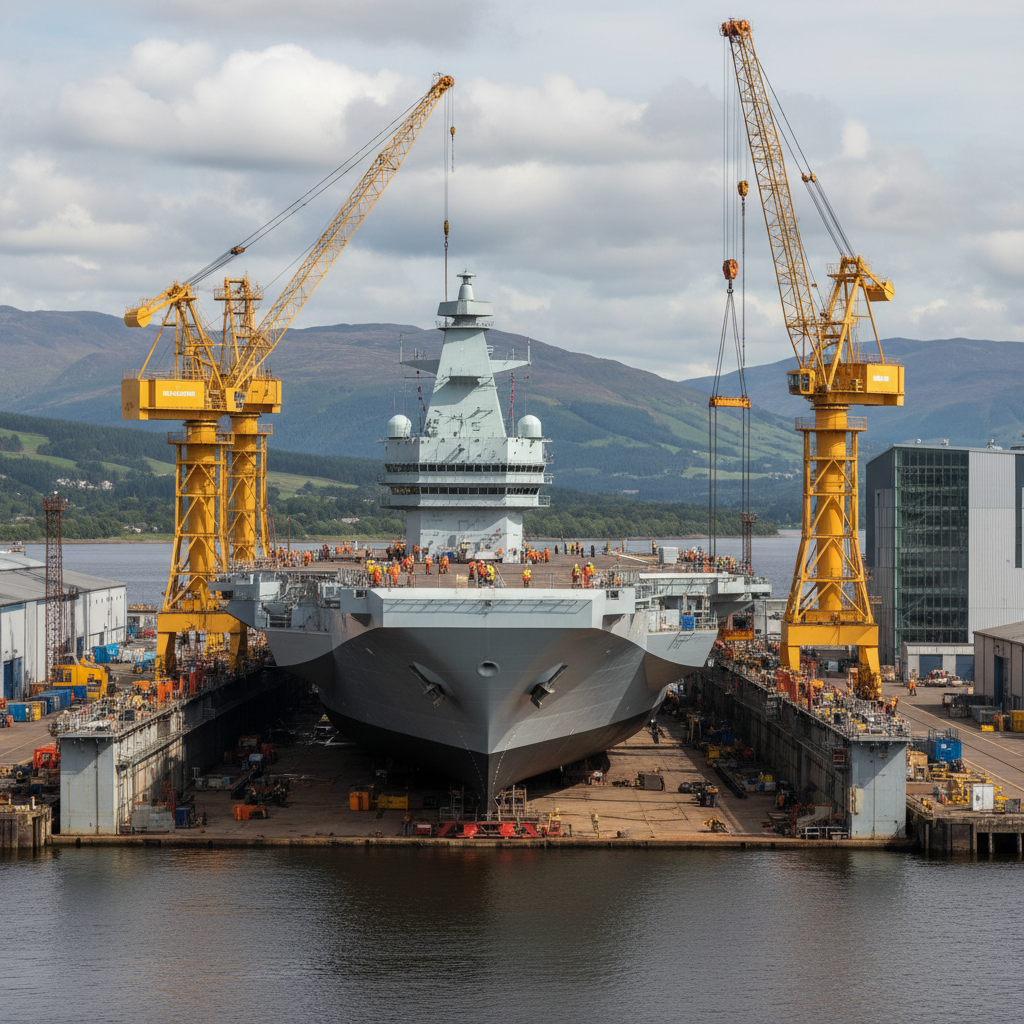
Prime Minister Rishi Sunak announced a £1.5bn contract with BAE Systems on 9 June for three additional Type 26 frigates to be built at the Govan and Scotstoun yards on the River Clyde in Glasgow. The expanded order brings the total number of Type 26 warships commissioned for the Royal Navy from eight to eleven vessels.
The deal is expected to sustain approximately 4,500 jobs across Scottish shipbuilding and the broader supply chain, with Defence Secretary Grant Shapps stating the new order would maintain work on the programme through the mid-2030s. The first vessel, HMS Glasgow, remains scheduled to enter Royal Navy service later this decade.
Government frames deal as industrial investment
Speaking during his visit to Scotland, Sunak positioned the announcement as both a boost to Scotland's industrial base and evidence of sustained UK defence spending despite broader fiscal constraints. The Prime Minister toured the Govan facility where construction of HMS Glasgow is already underway, observing workers installing advanced combat systems and propulsion equipment.
The timing comes as the government faces pressure over defence budgets whilst maintaining commitments to NATO's 2% GDP spending target. Treasury sources indicated the £1.5bn allocation had been secured within existing defence spending plans, avoiding additional borrowing requirements that could complicate fiscal policy.
BAE Systems will execute the construction across its two Clyde facilities, continuing the Type 26 programme that has been central to maintaining Scotland's naval shipbuilding capacity. The yards employ approximately 3,000 direct workers, with the extended programme ensuring no redundancies through the current economic uncertainty.
Industry welcomes extended production certainty
BAE Systems executives described the additional order as crucial for maintaining the skilled workforce required for complex warship construction. The company has invested over £100m in facility upgrades at both Clyde sites since the original Type 26 contract was awarded, including new welding bays and digital design capabilities.
Trade union representatives welcomed the job security, with GMB Scotland highlighting that many workers had faced uncertainty about future employment beyond the initial eight-ship order. The union noted that apprenticeship programmes could now continue with confidence, ensuring the next generation of shipbuilders receives training.
Shapps emphasised that the expanded order provides certainty for the Scottish workforce well into the next decade, addressing concerns about potential gaps in naval construction work. The Defence Secretary indicated that discussions about follow-on programmes, including potential Type 32 frigates, would begin before the Type 26 production concludes.
Strategic context amid global naval competition
The Type 26 programme has been positioned as crucial for maintaining the UK's naval shipbuilding expertise, with the vessels designed to replace the Royal Navy's aging Type 23 frigate fleet. Each ship represents advanced anti-submarine warfare capabilities, incorporating systems designed to counter modern maritime threats including Russian submarine activity in the North Atlantic.
The announcement comes amid increased focus on naval capabilities following Russia's invasion of Ukraine and growing tensions in the Indo-Pacific region. Defence analysts note that the Type 26's advanced sonar systems and anti-submarine warfare capabilities address specific threats identified in the government's Integrated Review of defence priorities.
International variants of the Type 26 design are being built for the Australian and Canadian navies, with the UK programme serving as the baseline for these exports. The extended UK order strengthens the platform's credibility for potential additional international sales, particularly to nations seeking proven anti-submarine warfare capabilities.
The 4,500 jobs figure encompasses direct employment at the Govan and Scotstoun facilities as well as positions throughout the supply chain across Scotland. Major suppliers include Rolls-Royce for propulsion systems, Thales for combat management, and dozens of smaller engineering firms providing specialist components.
Economic impact extends beyond shipyards
Economic impact assessments suggest the programme generates approximately £3 of economic activity for every £1 of direct investment, with benefits extending across central Scotland's manufacturing base. Steel suppliers in Lanarkshire, electronics firms in Edinburgh, and precision engineering companies throughout the region contribute to the Type 26 supply chain.
The Clyde yards have historically been central to Royal Navy construction, with the facilities having built destroyers, frigates, and aircraft carriers over decades. The Type 26 programme represents the continuation of this heritage whilst incorporating modern naval requirements including reduced acoustic signatures and modular construction techniques.
Local economic development agencies estimate the programme supports approximately 1,200 indirect jobs across Scotland, from component manufacturers to logistics providers. The extended timeline now provides stability for these businesses to invest in new equipment and training programmes.
Long-term implications for Scottish shipbuilding
Beyond the immediate job security, the expanded order positions the Clyde facilities as the UK's primary naval construction hub through the 2030s. This provides a foundation for potential future naval programmes and maintains the skilled workforce necessary for complex warship construction.
The deal also reinforces Scotland's position within UK defence manufacturing, demonstrating continued government investment in Scottish industrial capabilities despite political tensions over independence. According to the BBC report, the announcement was carefully timed to highlight the government's commitment to Scottish industry ahead of broader political considerations.
With HMS Glasgow expected to begin sea trials later this decade, the programme will soon transition from construction to operational deployment. The additional vessels will follow in sequence, ensuring continuous production and employment at the Clyde yards whilst delivering enhanced naval capabilities to the Royal Navy's surface fleet through the 2040s.