House of Lords votes again for under-16 social media ban as government faces mounting pressure
Peers vote 266 to 141 for statutory ban on platforms like TikTok and Instagram for children, giving ministers a year to implement restrictions.
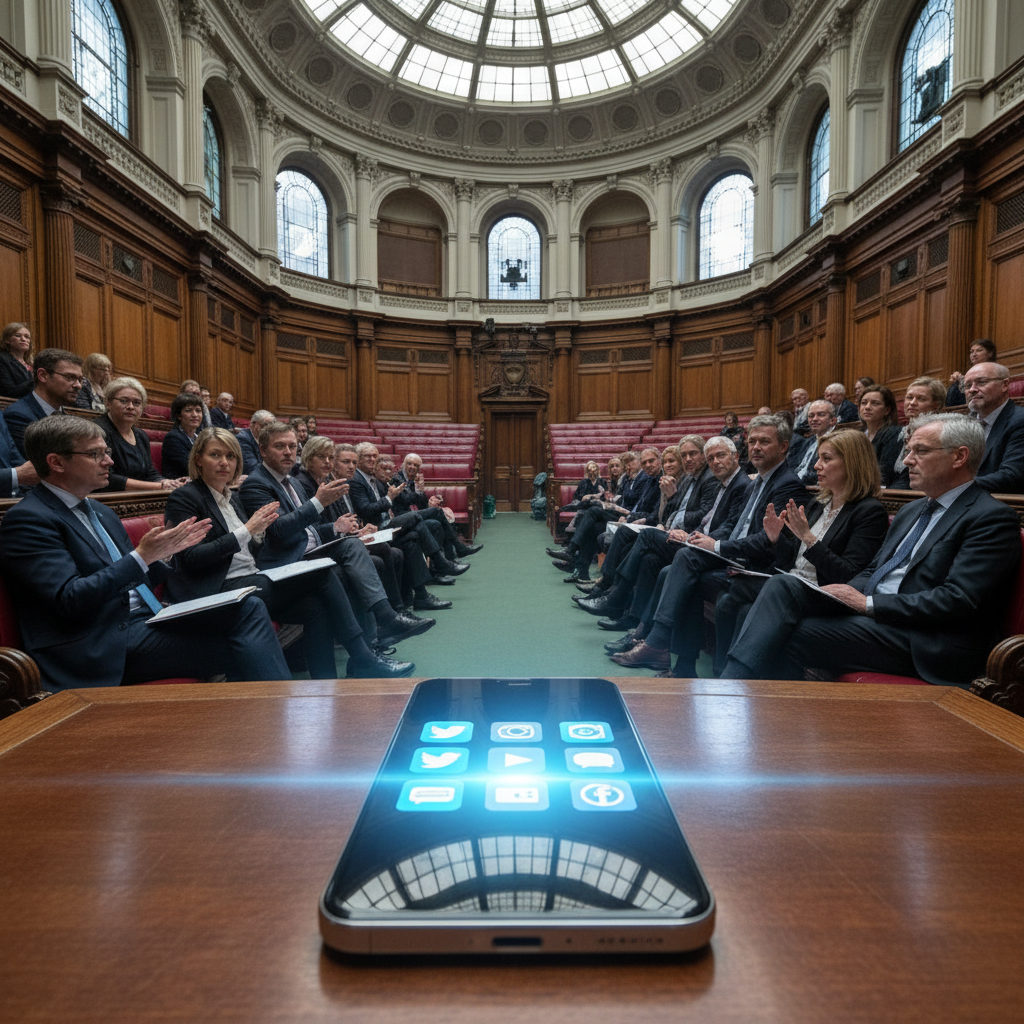
The House of Lords has voted for the second time to force the UK government to ban social media access for children under 16, passing an amendment by 266 votes to 141 that would give ministers one year to define which platforms must be off-limits to this age group.
The amendment, tabled by Conservative former minister Lord Nash to the Children's Wellbeing and Schools Bill, builds on Prime Minister Keir Starmer's existing plans to bar platforms including Snapchat, TikTok, YouTube, Instagram, Facebook and X from offering services to under-16s. The vote marks renewed pressure from the upper chamber on a government already committed to sweeping online safety reforms.
Government timeline faces scrutiny
The Lords amendment would require action within 12 months, potentially accelerating the government's current timeline which envisages regulations in place by Christmas and a full ban taking effect in spring 2027. Starmer's broader package includes default blocks on harmful features like livestreaming and stranger contact for under-18s, going beyond the age-verification measures already required under existing online safety legislation.
The government has not yet responded to Tuesday's vote, but ministers have previously indicated support for age restrictions whilst emphasising the complexity of implementation across different platforms and jurisdictions. Technology Secretary Peter Kyle has warned that rushed implementation could create loopholes that tech companies might exploit, arguing for a measured approach that ensures comprehensive coverage across all relevant platforms.
The amendment now returns to the Commons, where MPs will decide whether to accept or reject the Lords' intervention. Government sources suggest ministers are considering whether to propose their own alternative timeline that balances urgency with practical implementation challenges.
Cross-party momentum builds behind restrictions
The 125-vote margin suggests significant cross-party backing in the Lords, with Labour peers joining Conservative and crossbench members in supporting the measure. Lord Nash argued during the debate that the amendment would "give kids their childhoods back" and pointed to rising rates of anxiety and depression among teenagers correlated with heavy social media use.
Liberal Democrat peer Baroness Brinton backed the proposal, citing research showing that 73% of parents support age restrictions on social media platforms. She argued that current voluntary measures by tech companies have proven insufficient to protect children from harmful content and addictive design features.
Crossbench peer Lord Bethell, a former health minister, told the chamber that emergency departments across the UK are seeing unprecedented numbers of young people presenting with mental health crises linked to online experiences. He described the current situation as a "public health emergency" requiring immediate legislative intervention.
Opposition has come primarily from tech industry representatives and some rights organisations, who question whether blanket age restrictions address underlying issues around platform design and content moderation. Baroness Kidron, despite supporting stronger online protections, warned that age verification systems could create new privacy risks for all users, not just children.
Scottish implications and enforcement challenges
For Scottish families and schools, a statutory ban would represent the most significant restriction on children's internet access since the introduction of age verification requirements for adult content. Education authorities across Scotland have already begun developing policies around social media use in schools, with Glasgow City Council implementing partial restrictions during school hours and Edinburgh exploring similar measures.
However, enforcement remains contentious. Tech companies argue that robust age verification could require identity documents or biometric data, raising privacy concerns particularly acute under Scottish data protection frameworks. Meta, which owns Instagram and Facebook, has indicated it would challenge any UK-specific age verification requirements that differ from EU standards, potentially creating a complex legal battleground.
Civil liberties groups have warned that blanket bans could restrict legitimate educational and social connections, particularly for vulnerable young people in rural Scottish communities where online platforms provide vital social links. The Scottish Youth Parliament has expressed mixed views, with some members supporting restrictions whilst others argue for better digital literacy education instead.
Police Scotland has indicated that enforcement would likely focus on platform compliance rather than individual users, but questions remain about how violations would be detected and prosecuted, particularly given the global nature of social media companies.
What happens next
The Children's Wellbeing and Schools Bill now returns to the House of Commons, where the government's substantial majority means MPs are likely to determine the final shape of any restrictions. Ministers must decide whether to accept the Lords amendment, propose alternative measures, or reject the proposal entirely and face a potential third vote in the upper chamber.
Parliamentary sources suggest the government is considering a compromise that would accept the principle of age restrictions whilst extending the implementation timeline to 18 months. This would allow for comprehensive consultation with tech companies, privacy advocates, and children's rights groups to develop a workable enforcement mechanism.
If implemented, the UK would join Australia in pursuing comprehensive social media age restrictions, though the Australian model focuses on platform liability rather than user verification. The Australian legislation, passed in November 2024, requires platforms to prevent under-16 access or face fines of up to 50 million Australian dollars.
According to the BBC report, the government has indicated it will respond to the Lords vote before the bill's final parliamentary stages, expected before the summer recess. Industry analysts suggest that any UK restrictions would likely influence regulatory approaches across Europe, given Britain's role as a testing ground for digital policy innovations.
The timeline suggests any new restrictions would not take effect until 2027 at the earliest, giving platforms and families time to adapt to what would represent the most significant change to children's online access in the UK's digital history. Tech companies are already developing age estimation technologies in anticipation of stricter global regulations, though their effectiveness and privacy implications remain subjects of intense debate.