R D Kernohan
A trail of two cities
A terrible thing happened as I watched the Edinburgh-Glasgow rugby match after the New Year. I discovered I was now a neutral. It took the Rangers-Celtic match next day to reassure me that I had not been neutered as well, and that living roughly half my life in each city had not destroyed all old loyalties. But it does give some new insights.
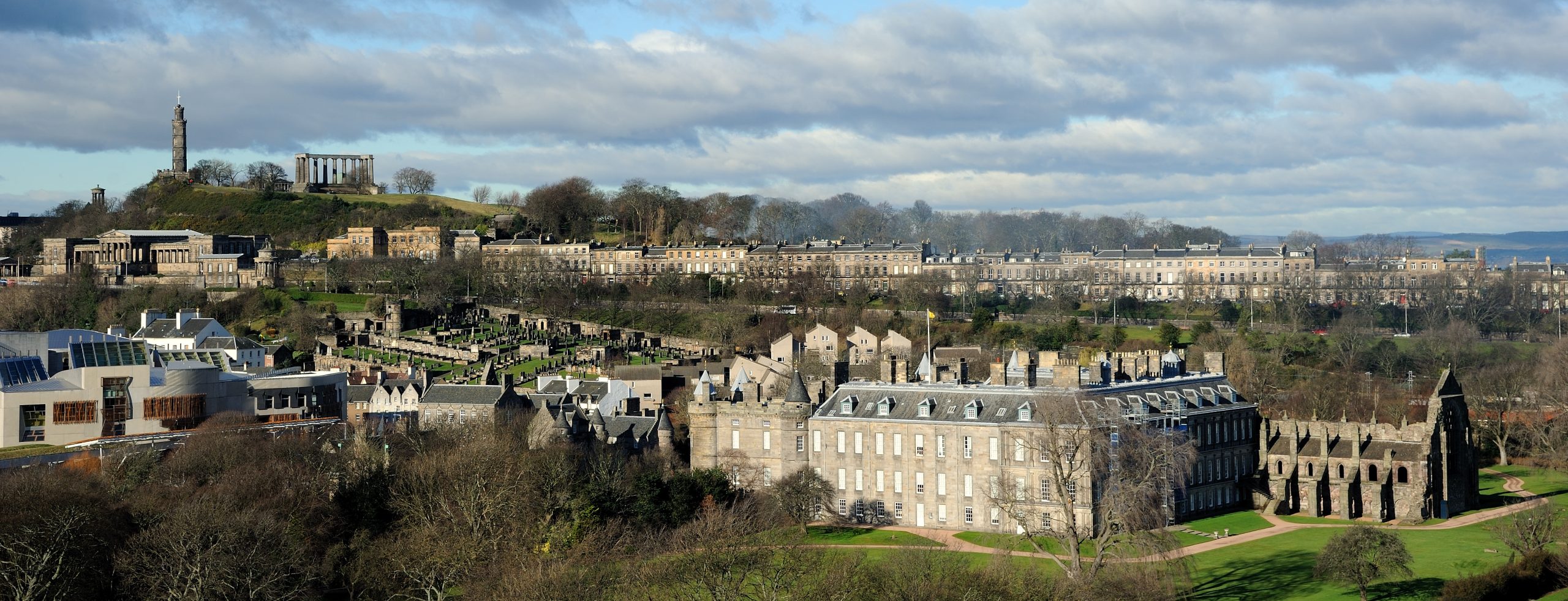
When I travel to England, Europe, or North America I now expect to be told: ‘I envy you living in so beautiful a city’, by which Edinburgh is meant. I don’t remember ever being told this when I travelled back to Glasgow, but the flattery is fair enough. Natural situation, turbulent history, artistic and literary achievement, intellectual tradition, and quality of architecture (underestimated Victorian as well as noble Georgian) have made Edinburgh one of the great cities of Europe. Its Festival and Fringe have made it a centre of international culture and for sub-cultures.
I don’t expect anyone quite to react that way if I say that I really belong to Glasgow. But I get annoyed when someone says: ‘Ah, yes: Scotland’s second city’ – a misconception of our old imperial claim (second only to London) also to be found on the internet.
Admittedly the idea of Glasgow as ‘Scotland’s second city’ may appear more plausible to outsiders than it used to be. When the Clyde was lined with shipyards and Glasgow was the heart and nerve-centre of Scotland’s heavy industry it was clearly Scotland’s commercial capital, with even an independent sector of independent Scottish banking.
Before the Second World War Glasgow had nearly 1,100,000 people and Edinburgh 450,000. Today the figures are 580,000 and 472,000. It might also be expected that inexorable growth of government and then the creation of a Scottish Parliament, expensively and ostentatiously housed in Edinburgh, would have consolidated a pre-eminence for the ‘capital city’ never evident, far less acknowledged, in those days of great disproportion in population.
But the relationship of the two cities remains a complicated affair of rivalry, distrust, affinity, and mutual dependence. It is never static. The trends have not all been in the one direction. Changing times have not always, as seemed inevitable a generation ago, worked in Edinburgh’s favour and to Glasgow’s disadvantage. The population figures also conceal something which I didn’t realise until I lived in Edinburgh. It’s a noble capital city for Scotland but as a regional centre is far less significant than Glasgow, still the metropolis for everywhere from Oban to Stranraer as well as the Clyde Valley. I’m not sure that even Fifers and Borderers really recognise Edinburgh as a ‘regional capital’.
The new parliament does not seem to have made the difference that might have been expected, partly because executive and administrative devolution long preceded the legislative kind, partly because Holyrood seems on the margin of the inner city, emotionally as well as geographically. I don’t underestimate the power for good or ill of the politicians there, despite the characterless debating chamber which often looks like an open-plan office with a lot of people gone for a coffee-break. Those of them who live in Edinburgh do add a new element to the tribal structure of Edinburgh, but they are far less influential in shaping its society than the older tribespeople in law, medicine, finance, academia, education, and the higher civil service. For the newcomer initiation into the appropriate tribe can be relatively easy, and Edinburgh’s professional and middle classes are drawn from far afield. I remember a select neighbourhood New Year party where my hostess paused in serving the drinks, invoked the deity, and exclaimed: ‘I’m the only Edinburgh person here’. But the politicians, like other newcomers, will often feel on that margin of the city and not at its heart.
Even if Edinburgh has gained a parliament it has lost in other ways. Brewing, publishing, and printing don’t count for what they once did. Nor does the church, even in assembly week. And if God counts for less, so does Mammon. Edinburgh will still retain a vast financial sector when the banks finally clear up their disaster sites but it will not be the power it was. Many jobs will have gone, and much influence. The RBS – the widespread use of the initials and not the proper name tells its own story – will no longer be as Scottish as it was and Edinburgh will be its seat of government rather than the centre of its being. The Bank of Scotland will be less a great institution than a valuable brand-name.
There are also two important areas in which Glasgow seems likely to increase its predominance. They are areas in which Edinburgh hasn’t enhanced its position as might have been expected. For Glasgow remains the media capital and the sports capital, facts of Scottish life which can be more confidently affirmed than entirely explained.
Maybe the explanation is slightly easier in sport than with media. Scotland has struggled to come to terms with the professionalisation of rugby, the sport in which Edinburgh counted for most, and in the attempt has weakened the game’s base among the clubs. Meanwhile Scottish football has become even more an affair of two Glasgow teams and a string of also-rans to make up the numbers, with the late Wallace Mercer unfairly reviled on both sides of Edinburgh when he thought of creating a united club to challenge Rangers and Celtic. The capital has also had to see Glasgow get the chance to profit far more from the Commonwealth Games than Edinburgh did, whether with its great success in 1970 or its troubled time in 1986.
But with media, even more than with sport, Edinburgh seems threatened by that perplexing biblical warning that those who have a lot sometimes get still more and the others lose even the little they have. That is true both of print media and broadcasting. Edinburgh’s morning and evening dailies have a total circulation under 100,000. Their trade figures for readership, even supplemented by their Sunday partner, suggest to me that only around 7% of adult Scots read a paper that belongs in their capital city. Glasgow’s figures are swollen by the tabloids and I hesitate to calculate a figure or say who really ‘belongs’ there. But there is no mistaking Glasgow’s domination. It is too powerful to be good for Scotland.
More surprisingly that is also true of broadcasting. The BBC (which once thought of a major move eastwards) has built a new palace in Glasgow. In Edinburgh you find it up a nook behind a pub-restaurant. The address I trace for STV in Edinburgh, where it once had the Gateway Theatre, seems to be up a stair in George Street, while Sky Broadcasting lists a cranny out at Davidson’s Mains. I don’t doubt that the broadcasters, as well as print journalists, are well catered for at Holyrood, though as divorced from the wider world as the lobby at Westminster, but it’s clear that devolution hasn’t made Edinburgh the media centre a city of its importance ought to be. It’s a conclusion I offer more in sorrow than in Old Glaswegian self-satisfaction.
I love both cities and see their assets, merits, and some of their vices. Living in Edinburgh I realise how happily we were spared the inner ring road which was once threatened, and how much Glasgow lost by the motorway driven across the city. Going back to Glasgow I see better than I ever did when on the trams to Gilmorehill or Buchanan Street the quality and quantity of fine buildings, mainly but by no means exclusively Victorian. The Mackintosh cult is still fervent enough, but full justice has not yet been done to Alexander Thomson and his contemporaries. Yet I remain only too aware of the disasters in high-rise building and council-estate sprawl which have compounded the deprivation and disorientation brought by industrial decline.
But I shake my head at the pettiness about Edinburgh which I sometimes encounter even in Glasgow’s professional classes. I also dislike that mean streak occasionally apparent in Edinburgh circles – for example when the notion comes up (as I hope it will again some day) of a new national gallery for Scottish art to which Glasgow contributed so much and which is insufficiently displayed in the limited space of the capital’s national institutions. Living in Edinburgh I may even appreciate Kelvingrove, the Burrell, and the Hunterian (the hidden jewel of Glasgow’s crown) more than I would if back in the west, but I see the force of the argument for a more equitable allocation of Scotland’s cultural budget. I’d want to see it go to new ventures, not to subsidise the municipal collections.
The two cities will never get on perfectly together, and the way in which we talk of Glaswegians and of ‘Edinburgh people’ – for Edinburgher sounds like a special offer in McDonald’s – says something about the retrained individualism and tribalism of the capital and about a Clydeside personality which can take in the Blue and the Green and even Pollokshields and Possilpark. But nowadays municipal relations seem to be reasonably cordial, and the allegations of east coast bias against Glasgow under Alex Salmond need to be taken at a generous political discount. Glasgow airport (and Edinburgh’s) should have had a rail connection long ago but the version vetoed by the SNP east-coasters never looked very good value for money.
Despite the bickering and the reflexes the two cities are inter-dependent. Those who respond to the astonishing international appeal of Edinburgh cannot fail to hear of the other city 45 miles away and many of them will visit and appreciate it. Next time they may come to Glasgow and take a day-trip to Edinburgh. And Edinburgh could not thrive as the capital of Scotland if its devolved government and parliament were to be dragged down by a deprived, despondent, and welfare-dependent Glasgow. Nor should the most fervent Glaswegian want to see Edinburgh reduced to its present status in media and sporting matters or permanently and gravely wounded by the bank disasters. Nor should any of us want the Athens of the North to become a Brasilia, Canberra, Ottawa, or (on the grandest scale) a Washington whose main business is politics.
Kept within bounds, the rivalry is good for Scotland, and the occasional tensions can be creative. But although I live in the capital I’m not sure if I’m yet an Edinburgh person, even if Glasgow never quite forgives those who take single tickets from Queen Street.
Get the
Scottish Review
in your inbox
free of charge
Check recent articles
in the SR library
[click here]
28.01.10
Issue no 200
Why does Ronnie
have to do it all?
Kenneth Roy
finds the living proof that Scotland is indeed
a small country
[click here]
Two ways to go
Catherine Czerkawska
explains from deep personal experience how the hospice
ethic is unique
[click here]
Why do we bang
them up?
Murray Ritchie
examines the reasons for Scotland’s addiction to imprisonment
[click here]
Let’s stop smiling
Walter Humes
on the absurd
requirement
to be upbeat
[click here]
We are blind to
some of our greats
R D Kernohan
defends Scottish reputations unjustly reviled
[click here]
Next edition: Tuesday