
Kenneth Roy
Ten questions about
what happened in
Scotland yesterday
James Robertson
Loving our fellow Scots?

Eileen Reid
Can we avoid being
angry? Should we
avoid being angry?
Ronnie Smith
Rose Galt is angry with me

R D Kernohan
It’s too late
for regrets. Yet,
regrets I have a few
Quintin Jardine
The Redknapp case


David Torrance
Barred from a
presbyterian church: ‘We
can’t just let anyone in’
John Cameron
Down with PC

Fiona MacDonald
It was exciting for a
morning, and then
it was back to grey
Life of George
Falling to bits

 09.02.12
No. 512
 Life of George
You know you’re on your own when a receptionist puts you on-hold to the theme from ‘Psycho’. Room service became a threatening prospect when all I needed was extra blankets. By 5pm I’d have settled for a shower curtain. A slight cock-up on the morning medication front meant my blood pressure dropped so much my feet could have auditioned for a movie about animated penguins that the remote repeatedly failed to cull.
BBC Alba saved the day with their, to me, incomprehensible football commentary. This allows for natural sounds of chanting crowds to outdo that unchanging vuvuzela drone, from £40,000 a show pundits in tight shirts.
Gaelic commentators may be talking similar crap, but if you don’t know –? ‘Toss a teuchter on them coals’ is an unusual zonal manoeuvre, but that’s how it sounded from under a hot and cold running duvet. Seconds later, it seemed, a vision appeared on the screen; mink-coat hair, cheekbones sculpted by Canova – tight shirt – no, not Robbie Savage – a Danish lingerie model turned politician, or vice versa.
Subtitles moved the narrative along but my feet were colder than the neo-fascist jacksocks of a sleezy MP. I gave in to 20 rounds with the mattress and nightlong rainwater running down the picture window.
That’s how it began on Saturday – during a morning speech on the topic of trust, every time someone filled a glass of water I lost faith in my bladder. By night I’d ticked every box in ‘The Psycho Test’ and then some extra boxes for bad measure, or balance.
George Chalmers
 The Cafe
Unlike many publications SR doesn’t have an online comment facility – we prefer a more considered approach. The Cafe is our readers’ forum. If you would like to contribute to it, please email islay@scottishreview.net

Islay’s Scotland
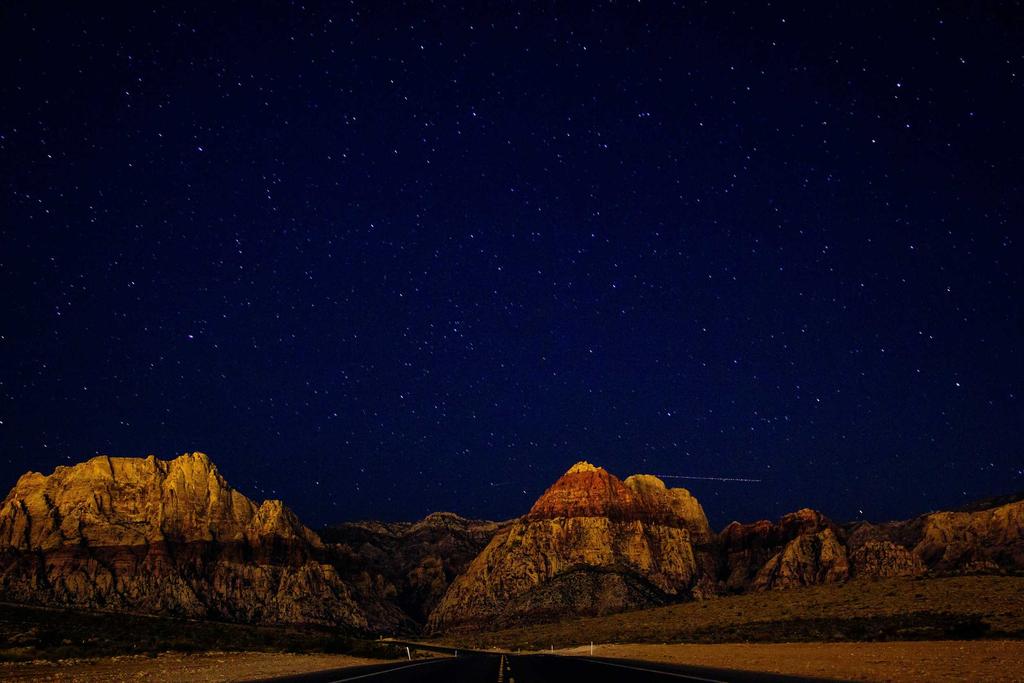
 Last night’s full moon over Ayrshire (and other places)
Photograph by Islay McLeod

It was exciting for a
morning, and then
it was back to grey
Fiona MacDonald
I
Monday:
Passengers from across the Atlantic and the Far East have evidently been put up in local hotels overnight and the terminal building is buzzing with activity. A number of members of the Saudi royal family were diverted here and accommodated at the Lochgreen Hotel in Troon. When one heard that a local restaurant, the Lido, was on fire, he went along to watch to pass the time. They left again early this morning.
Predictably, three inches of snow has caused havoc at Heathrow, grounding 600 flights the day before. The Daily Telegraph says that following the airport chaos in December 2010, BAA increased its fleet of snowploughs by 68 to 185 at a cost of £32.4m. This is a massive investment yet all still grinds to a halt at the first sign of wintry weather. Why?
Elsewhere, the same newspaper reports that according to a union-commissioned study, Britain’s railways are the worst in Europe for fares, efficiency and comfort. This will come as no surprise at all to passengers, but I suspect they are also the worst for bad behaviour. Following the editor and deputy editor’s grim observations of sectarian and homophobic behaviour in separate incidents detailed in SR last week, a visitor to the office a few days ago arrived off the train from Glasgow reeling from enduring a fellow passenger – a woman – making a long and loud phonecall filled with obscenities. We all have our own similar, dismal stories.
A train is a very particular environment. Those who are bent on antisocial activity feel invincible, beyond the reach of the law encased in a speeding metal tube, while the rest of us feel vulnerable and isolated from wider society. We need police to target certain trains, especially on big match days, to ensure that the protections afforded us everywhere else do not end when the electric doors close.
By lunchtime the glamour which tinged our lives on a Monday morning has gone from the window and the scene has returned to grey.
II
Oh dear, is there nowhere safe from the routine spying eye of Big Brother? It seems that across the EU farmers’ fields are monitored by satellites hundreds of kilometres up in space lest they are diddling the EU in wrongly claimed subsidies – not in Scotland though, but only because of the difficulty of getting enough clear weather for flyovers. Apparently these satellites have been in use for years but now they are trying out drones which have the advantage of being able to get up close and to take photographs at an angle rather than just from directly above.
It’s infinitely depressing, this idea that no-one can be trusted to act honestly if others are not watching and I worry about young people growing up taking it for granted that they will be constantly monitored. About a year or so ago I was watching a breakfast-time report on cameras in schools (I know of schools where there is a camera not just in the corridors but in every classroom) and the reporter asked a pupil how he/she (I can’t remember which) felt about it. He/she said it was a great thing because he/she could walk through the school unmolested and with lunch money intact.
Now, I went to a pretty rough comprehensive – the kind of place where pupils had to be compelled to remove their duffle coats for PE – and not once did I ever feel under any threat from anyone in its unmonitored classrooms and halls. It is worrying and depressing that children are growing up encouraged to believe that those around them can’t be trusted, that cameras are the only things stopping their lives from slipping into chaos at any moment.
III
I am bereft. I have just watched the final two episodes of ‘Borgen’ on bbci player. I calculate that between ‘The Killing’ and ‘Borgen’, I have watched 40 hours of classy, compelling, believable Danish drama in the last year thanks to BBC4. I have tried to encourage friends to watch, but many have resisted on the grounds that they don’t like anything with subtitles.
I once shared that prejudice but was converted by the first minutes of the first episode of the first series of ‘The Killing’. Why, I have even picked up a few Danish words: ‘wife’, ‘thank you’, ‘certainly’, ‘darling’. Then there is that curious ‘F’ word which is sometimes translated as ‘hell’ – as in ‘What the hell are you doing?’ – and is sometimes translated as something considerably stronger. And it seems the Danish for ‘human resources’ is, well, ‘human resources’.
Many familiar faces pitched up in ‘Borgen’, among them Søren Malling who played Jan Meyer, Sarah Lund’s ill-fated sidekick in ‘The Killing’, and head of news, Torben Friis, in the political drama. So believable was he in the journalist role than I could easily believe he not an actor at all and I was actually eavesdropping on real editorial conferences.
Do DR, the Danish public service broadcaster which made both series, have any more where these came from? I do hope so.

Fiona MacDonald is director of the Young UK and Ireland Programme
presbyterian church: ‘We
can’t just let anyone in’
John Cameron
Down with PC
Fiona MacDonald
It was exciting for a
morning, and then
it was back to grey
Life of George
Falling to bits
09.02.12
No. 512
Life of George
You know you’re on your own when a receptionist puts you on-hold to the theme from ‘Psycho’. Room service became a threatening prospect when all I needed was extra blankets. By 5pm I’d have settled for a shower curtain. A slight cock-up on the morning medication front meant my blood pressure dropped so much my feet could have auditioned for a movie about animated penguins that the remote repeatedly failed to cull.
BBC Alba saved the day with their, to me, incomprehensible football commentary. This allows for natural sounds of chanting crowds to outdo that unchanging vuvuzela drone, from £40,000 a show pundits in tight shirts.
Gaelic commentators may be talking similar crap, but if you don’t know –? ‘Toss a teuchter on them coals’ is an unusual zonal manoeuvre, but that’s how it sounded from under a hot and cold running duvet. Seconds later, it seemed, a vision appeared on the screen; mink-coat hair, cheekbones sculpted by Canova – tight shirt – no, not Robbie Savage – a Danish lingerie model turned politician, or vice versa.
Subtitles moved the narrative along but my feet were colder than the neo-fascist jacksocks of a sleezy MP. I gave in to 20 rounds with the mattress and nightlong rainwater running down the picture window.
That’s how it began on Saturday – during a morning speech on the topic of trust, every time someone filled a glass of water I lost faith in my bladder. By night I’d ticked every box in ‘The Psycho Test’ and then some extra boxes for bad measure, or balance.
George Chalmers
The Cafe
Unlike many publications SR doesn’t have an online comment facility – we prefer a more considered approach. The Cafe is our readers’ forum. If you would like to contribute to it, please email islay@scottishreview.net
Islay’s Scotland
Last night’s full moon over Ayrshire (and other places)
Photograph by Islay McLeod
It was exciting for a
morning, and then
it was back to grey
Fiona MacDonald
I
Monday:
Passengers from across the Atlantic and the Far East have evidently been put up in local hotels overnight and the terminal building is buzzing with activity. A number of members of the Saudi royal family were diverted here and accommodated at the Lochgreen Hotel in Troon. When one heard that a local restaurant, the Lido, was on fire, he went along to watch to pass the time. They left again early this morning.
Predictably, three inches of snow has caused havoc at Heathrow, grounding 600 flights the day before. The Daily Telegraph says that following the airport chaos in December 2010, BAA increased its fleet of snowploughs by 68 to 185 at a cost of £32.4m. This is a massive investment yet all still grinds to a halt at the first sign of wintry weather. Why?
Elsewhere, the same newspaper reports that according to a union-commissioned study, Britain’s railways are the worst in Europe for fares, efficiency and comfort. This will come as no surprise at all to passengers, but I suspect they are also the worst for bad behaviour. Following the editor and deputy editor’s grim observations of sectarian and homophobic behaviour in separate incidents detailed in SR last week, a visitor to the office a few days ago arrived off the train from Glasgow reeling from enduring a fellow passenger – a woman – making a long and loud phonecall filled with obscenities. We all have our own similar, dismal stories.
A train is a very particular environment. Those who are bent on antisocial activity feel invincible, beyond the reach of the law encased in a speeding metal tube, while the rest of us feel vulnerable and isolated from wider society. We need police to target certain trains, especially on big match days, to ensure that the protections afforded us everywhere else do not end when the electric doors close.
By lunchtime the glamour which tinged our lives on a Monday morning has gone from the window and the scene has returned to grey.
II
Oh dear, is there nowhere safe from the routine spying eye of Big Brother? It seems that across the EU farmers’ fields are monitored by satellites hundreds of kilometres up in space lest they are diddling the EU in wrongly claimed subsidies – not in Scotland though, but only because of the difficulty of getting enough clear weather for flyovers. Apparently these satellites have been in use for years but now they are trying out drones which have the advantage of being able to get up close and to take photographs at an angle rather than just from directly above.
It’s infinitely depressing, this idea that no-one can be trusted to act honestly if others are not watching and I worry about young people growing up taking it for granted that they will be constantly monitored. About a year or so ago I was watching a breakfast-time report on cameras in schools (I know of schools where there is a camera not just in the corridors but in every classroom) and the reporter asked a pupil how he/she (I can’t remember which) felt about it. He/she said it was a great thing because he/she could walk through the school unmolested and with lunch money intact.
Now, I went to a pretty rough comprehensive – the kind of place where pupils had to be compelled to remove their duffle coats for PE – and not once did I ever feel under any threat from anyone in its unmonitored classrooms and halls. It is worrying and depressing that children are growing up encouraged to believe that those around them can’t be trusted, that cameras are the only things stopping their lives from slipping into chaos at any moment.
III
I am bereft. I have just watched the final two episodes of ‘Borgen’ on bbci player. I calculate that between ‘The Killing’ and ‘Borgen’, I have watched 40 hours of classy, compelling, believable Danish drama in the last year thanks to BBC4. I have tried to encourage friends to watch, but many have resisted on the grounds that they don’t like anything with subtitles.
I once shared that prejudice but was converted by the first minutes of the first episode of the first series of ‘The Killing’. Why, I have even picked up a few Danish words: ‘wife’, ‘thank you’, ‘certainly’, ‘darling’. Then there is that curious ‘F’ word which is sometimes translated as ‘hell’ – as in ‘What the hell are you doing?’ – and is sometimes translated as something considerably stronger. And it seems the Danish for ‘human resources’ is, well, ‘human resources’.
Many familiar faces pitched up in ‘Borgen’, among them Søren Malling who played Jan Meyer, Sarah Lund’s ill-fated sidekick in ‘The Killing’, and head of news, Torben Friis, in the political drama. So believable was he in the journalist role than I could easily believe he not an actor at all and I was actually eavesdropping on real editorial conferences.
Do DR, the Danish public service broadcaster which made both series, have any more where these came from? I do hope so.
Fiona MacDonald is director of the Young UK and Ireland Programme
09.02.12
No. 512
Life of GeorgeBBC Alba saved the day with their, to me, incomprehensible football commentary. This allows for natural sounds of chanting crowds to outdo that unchanging vuvuzela drone, from £40,000 a show pundits in tight shirts.
Gaelic commentators may be talking similar crap, but if you don’t know –? ‘Toss a teuchter on them coals’ is an unusual zonal manoeuvre, but that’s how it sounded from under a hot and cold running duvet. Seconds later, it seemed, a vision appeared on the screen; mink-coat hair, cheekbones sculpted by Canova – tight shirt – no, not Robbie Savage – a Danish lingerie model turned politician, or vice versa.
Subtitles moved the narrative along but my feet were colder than the neo-fascist jacksocks of a sleezy MP. I gave in to 20 rounds with the mattress and nightlong rainwater running down the picture window.
That’s how it began on Saturday – during a morning speech on the topic of trust, every time someone filled a glass of water I lost faith in my bladder. By night I’d ticked every box in ‘The Psycho Test’ and then some extra boxes for bad measure, or balance.
The Cafe Islay’s Scotland
Last night’s full moon over Ayrshire (and other places)Photograph by Islay McLeod
Monday:
Passengers from across the Atlantic and the Far East have evidently been put up in local hotels overnight and the terminal building is buzzing with activity. A number of members of the Saudi royal family were diverted here and accommodated at the Lochgreen Hotel in Troon. When one heard that a local restaurant, the Lido, was on fire, he went along to watch to pass the time. They left again early this morning.
Predictably, three inches of snow has caused havoc at Heathrow, grounding 600 flights the day before. The Daily Telegraph says that following the airport chaos in December 2010, BAA increased its fleet of snowploughs by 68 to 185 at a cost of £32.4m. This is a massive investment yet all still grinds to a halt at the first sign of wintry weather. Why?
Elsewhere, the same newspaper reports that according to a union-commissioned study, Britain’s railways are the worst in Europe for fares, efficiency and comfort. This will come as no surprise at all to passengers, but I suspect they are also the worst for bad behaviour. Following the editor and deputy editor’s grim observations of sectarian and homophobic behaviour in separate incidents detailed in SR last week, a visitor to the office a few days ago arrived off the train from Glasgow reeling from enduring a fellow passenger – a woman – making a long and loud phonecall filled with obscenities. We all have our own similar, dismal stories.
A train is a very particular environment. Those who are bent on antisocial activity feel invincible, beyond the reach of the law encased in a speeding metal tube, while the rest of us feel vulnerable and isolated from wider society. We need police to target certain trains, especially on big match days, to ensure that the protections afforded us everywhere else do not end when the electric doors close.
By lunchtime the glamour which tinged our lives on a Monday morning has gone from the window and the scene has returned to grey.
Oh dear, is there nowhere safe from the routine spying eye of Big Brother? It seems that across the EU farmers’ fields are monitored by satellites hundreds of kilometres up in space lest they are diddling the EU in wrongly claimed subsidies – not in Scotland though, but only because of the difficulty of getting enough clear weather for flyovers. Apparently these satellites have been in use for years but now they are trying out drones which have the advantage of being able to get up close and to take photographs at an angle rather than just from directly above.
It’s infinitely depressing, this idea that no-one can be trusted to act honestly if others are not watching and I worry about young people growing up taking it for granted that they will be constantly monitored. About a year or so ago I was watching a breakfast-time report on cameras in schools (I know of schools where there is a camera not just in the corridors but in every classroom) and the reporter asked a pupil how he/she (I can’t remember which) felt about it. He/she said it was a great thing because he/she could walk through the school unmolested and with lunch money intact.
Now, I went to a pretty rough comprehensive – the kind of place where pupils had to be compelled to remove their duffle coats for PE – and not once did I ever feel under any threat from anyone in its unmonitored classrooms and halls. It is worrying and depressing that children are growing up encouraged to believe that those around them can’t be trusted, that cameras are the only things stopping their lives from slipping into chaos at any moment.
I am bereft. I have just watched the final two episodes of ‘Borgen’ on bbci player. I calculate that between ‘The Killing’ and ‘Borgen’, I have watched 40 hours of classy, compelling, believable Danish drama in the last year thanks to BBC4. I have tried to encourage friends to watch, but many have resisted on the grounds that they don’t like anything with subtitles.
I once shared that prejudice but was converted by the first minutes of the first episode of the first series of ‘The Killing’. Why, I have even picked up a few Danish words: ‘wife’, ‘thank you’, ‘certainly’, ‘darling’. Then there is that curious ‘F’ word which is sometimes translated as ‘hell’ – as in ‘What the hell are you doing?’ – and is sometimes translated as something considerably stronger. And it seems the Danish for ‘human resources’ is, well, ‘human resources’.
Many familiar faces pitched up in ‘Borgen’, among them Søren Malling who played Jan Meyer, Sarah Lund’s ill-fated sidekick in ‘The Killing’, and head of news, Torben Friis, in the political drama. So believable was he in the journalist role than I could easily believe he not an actor at all and I was actually eavesdropping on real editorial conferences.
Do DR, the Danish public service broadcaster which made both series, have any more where these came from? I do hope so.